The Hairspray Vault Crime Story
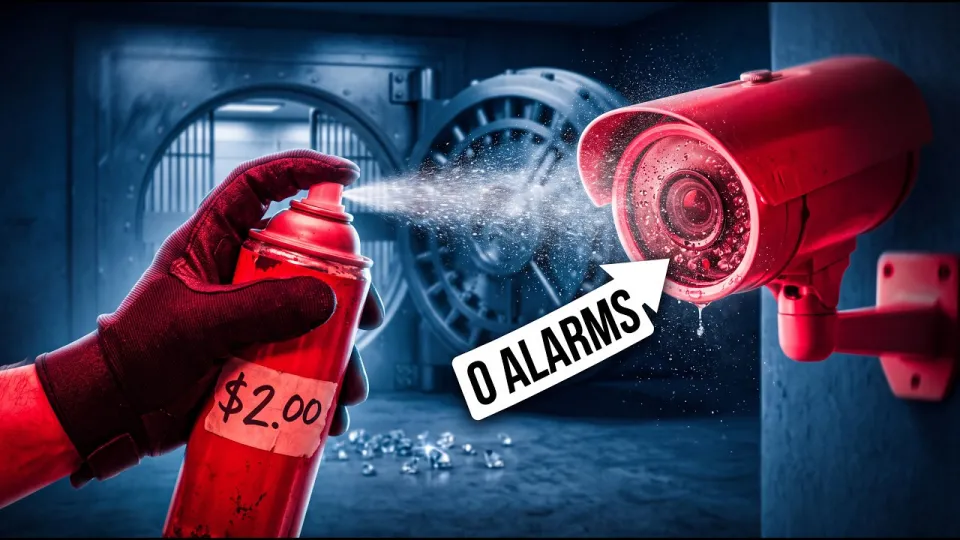
Video: How a $2 Can of Hairspray Robbed the World’s Safest Vault (crime story)
· based on the channel Max Crime
Key takeaways
- In February 2003, thieves stole over $100 million in diamonds and jewelry from the Antwerp Diamond Center.
- The vault showed no signs of forced entry; security systems including seismic alarms and magnetic fields were bypassed.
- A $2 can of hairspray was allegedly used to defeat infrared sensors and other security measures.
- Leonardo Notarbartolo was convicted based on evidence from discarded trash.
- Most of the stolen goods were never recovered.
The crime story of the Antwerp Diamond Center heist is a masterclass in deception: in February 2003, a crew stole over $100 million in diamonds and jewelry from a vault considered the world's safest, without firing a shot or triggering a single alarm. The thieves bypassed seismic sensors, magnetic fields, and infrared detectors, and allegedly used a simple $2 can of hairspray to obscure their movements. The case remained unsolved for years until discarded trash led investigators to Leonardo Notarbartolo and his accomplices.
The Target: Antwerp Diamond Center
The Antwerp Diamond Center was designed to be impenetrable, housing hundreds of safe-deposit boxes filled with diamonds, gold, and cash. Its security included seismic alarms to detect drilling, magnetic field sensors, infrared motion detectors, and a vault door weighing several tons. The center was located in the heart of Antwerp's diamond district, a high-security area with constant police patrols. Despite these measures, the thieves found a way in.
The Hairspray Trick and Other Bypasses
The crew's method was audacious: they allegedly used hairspray to coat the lenses of infrared sensors, rendering them ineffective without triggering an alarm. Hairspray leaves a thin film that can block the sensor's beam, and its residue is easy to clean up later. The thieves also disabled the seismic alarm by carefully timing their drilling and using specialized equipment to avoid vibrations. They exploited knowledge of the security system's weaknesses, possibly obtained from inside information. The operation took place over a weekend when the center was closed, giving them hours to work undisturbed.
The Investigation and the Trash Trail
Despite the precision of the heist, the crew made a critical mistake: they failed to properly dispose of their evidence. Investigators found discarded items, including receipts, tools, and even a half-eaten sandwich, in a nearby field. DNA and fingerprints on these items led police to Leonardo Notarbartolo, a known figure in organized crime. The trash also contained documents that revealed the crew's planning and movements. Notarbartolo was arrested and later convicted, receiving a 10-year sentence. Other members of the crew were also identified, but some remain at large.
The Mastermind: Leonardo Notarbartolo
Leonardo Notarbartolo was a seasoned criminal with connections to the Italian underworld. He had been involved in various heists across Europe and was known for his meticulous planning. In the Antwerp case, he posed as a diamond merchant to gain access to the center and study its security. His role was to gather intelligence and coordinate the break-in. After his arrest, Notarbartolo claimed that the heist was orchestrated by a mysterious figure known only as "the King of Diamonds," and that the stolen goods were part of a larger scheme. However, these claims were never substantiated.
The Loot: What Was Stolen and What Remains Missing
The thieves emptied over 120 safe-deposit boxes, taking diamonds, gold, and jewelry valued at more than $100 million. The exact contents were never fully disclosed because many victims were reluctant to report their losses, possibly due to tax evasion or illegal activities. Most of the stolen goods were never recovered. Some items were found in Notarbartolo's possession, but the majority disappeared, likely sold on the black market. The heist remains one of the largest diamond thefts in history.
Security Lessons and Legacy
The Antwerp Diamond Center heist exposed vulnerabilities in even the most advanced security systems. It highlighted the importance of human error and the need for redundant security measures. After the heist, the center upgraded its security, and the case became a case study for security professionals. The use of hairspray to defeat sensors is now a known tactic, and modern systems are designed to detect such tampering. The story also illustrates how organized crime can infiltrate high-security environments through careful planning and inside knowledge.
Conclusion: The Hairspray Heist's Enduring Mystery
The Antwerp Diamond Center heist is a crime story that continues to fascinate because it combines audacity, ingenuity, and a touch of absurdity—a $2 can of hairspray defeating a multi-million-dollar security system. While Leonardo Notarbartolo and some accomplices were caught, the mastermind and most of the loot remain elusive. The case underscores the cat-and-mouse game between criminals and security experts. For a deeper dive into this and other notorious heists, watch the full breakdown on the Max Crime channel, where detailed investigations bring such stories to life.
Source: How a $2 Can of Hairspray Robbed the World’s Safest Vault (crime story) · Markdown version
Questions & answers
How did a can of hairspray help rob the Antwerp Diamond Center?
The thieves allegedly used hairspray to coat infrared sensors, blocking their beams without triggering alarms. The residue could be easily cleaned, leaving no trace. This simple trick disabled a key part of the vault's security system.
Who was caught and how?
Leonardo Notarbartolo was arrested after investigators found discarded trash containing his DNA and fingerprints. The trash also included receipts and tools that linked him to the heist. He was later convicted and sentenced to 10 years in prison.
Was all the stolen loot recovered?
No, most of the stolen diamonds and jewelry were never recovered. Some items were found in Notarbartolo's possession, but the majority disappeared, likely sold on the black market. The total value exceeded $100 million.
What security weaknesses did the heist reveal?
The heist showed that even advanced systems like seismic alarms and magnetic field sensors can be bypassed with insider knowledge and simple tools. It highlighted the need for redundant security measures and regular audits. The case led to upgrades in vault security worldwide.